Human error: what if we stopped looking for someone to blame?
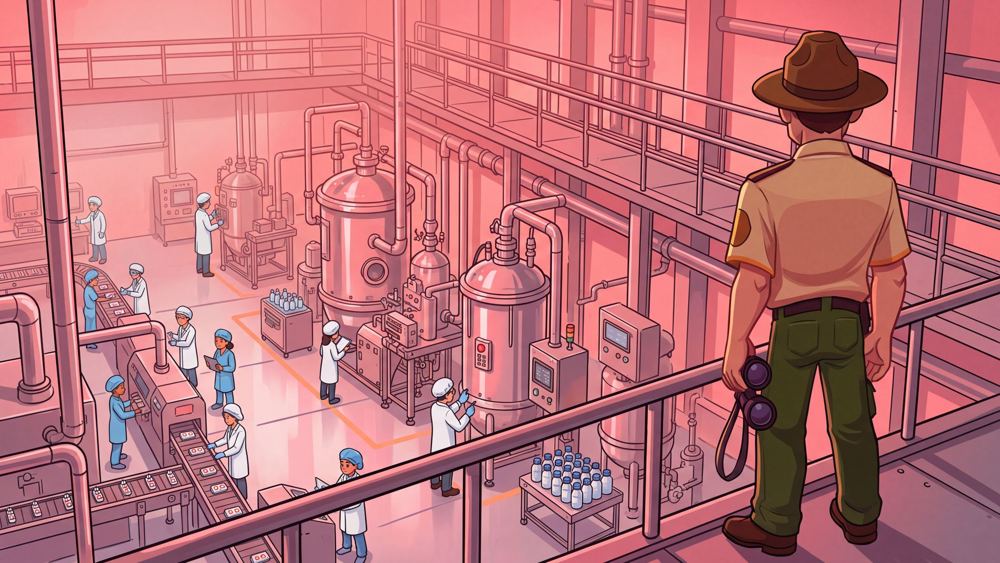
A label not properly checked, a forgotten step, a value copied wrongly. The investigation concludes: “human error”. Action: reminder to the operator, an extra check added. Three months later, the same error comes back, with another operator.
Human error is a symptom, not a cause
Concluding “human error” describes what happened, not why. A competent, trained, well-meaning person made a mistake: the real question is to understand what, in their environment, made this error possible, or even likely.
It’s also the effect of attribution bias: it’s easier to attribute the error to the person than to the system. It gives an illusion of control, but prevents learning.
Why the usual responses fail
Reminding people of the rules
The person knew the rule. Reminding them changes neither the design of the workstation, nor the workload, nor the difficulty of the task. And when the reminder turns into a reproach, its main effect is to discourage reporting.
The extra check
Adding a verification seems reassuring. But a repeated check ends up becoming mechanical: you see what you expect to see. Worse, the first person relies on the second, and the second on the first. Checks pile up, workload increases, and the error remains possible.
Look for the real causes
A useful human error investigation looks beyond the person:
- the task: is it complex, rare, repetitive, interrupted?
- the workstation and tools: is the information legible, in the right place, unambiguous? Do two products look too alike?
- the document: is the procedure clear, or does it leave room for interpretation?
- the organisation: workload, deadline pressure, interruptions, shift changes.
For this, nothing replaces the shop floor: going through the task again with the person, watching other operators carry out the same operation, understanding why what was done seemed logical at the time.
Actions that change the system
The most effective actions make the error impossible or immediately visible: a poka-yoke, a redesigned presentation of information, a simplified document, a reorganised task. When a check remains necessary, it must be designed to be genuinely effective, using several senses rather than a simple glance.
Change the question
Moving from “who is to blame?” to “what do we learn?” changes everything. Teams report more willingly, investigations go further, and the same errors stop coming back. It’s the condition for really reducing human-error deviations.