Quality organisation: why your teams are running without getting anywhere

Everyone is overwhelmed, and yet the underlying work isn’t moving forward. Days go by between meetings, emergencies and chasers. The first response is often to ask for extra headcount. Before that, it’s worth looking at how the work is organised.
Why a team loses capacity
Jumping from one topic to another
Every time a person changes topic, they lose time getting back into the context. A day split into ten different topics is a day where a large share of energy goes into restarts.
Everyone does a bit of everything
When the same task is owned by several people, they have to coordinate, keep each other informed, check who did what. Exchanges multiply, information arrives twice or too late, and some tasks end up owned by nobody.
Meetings pile up
During one assessment, we counted 46 weekly meetings within the same scope: the equivalent of nine full-time people spent in meetings every week. Each had its reason for being. Together, they absorbed a huge share of capacity.
The short term first, the medium term never
When day-to-day emergencies and underlying work rest on the same people, the emergency always wins. Improvement projects slip from month to month.
Start from processes, not the organisation chart
An effective organisation is built from what the team has to produce. Four pillars make this possible:
- Map processes and activities, in workshops with the teams, including meetings.
- Clarify who does what with a detailed RACI, which reveals at a glance duplicated and orphan tasks.
- Measure the real workload per person and per process, distinguishing the short and medium term.
- Put the right skills in the right place, with a skills matrix per position.
One process, one team
The guiding principle is simple: organise teams around processes, and separate day-to-day emergencies from underlying work. Everyone knows what they own, exchanges decrease, and the medium term finally has someone to take care of it.
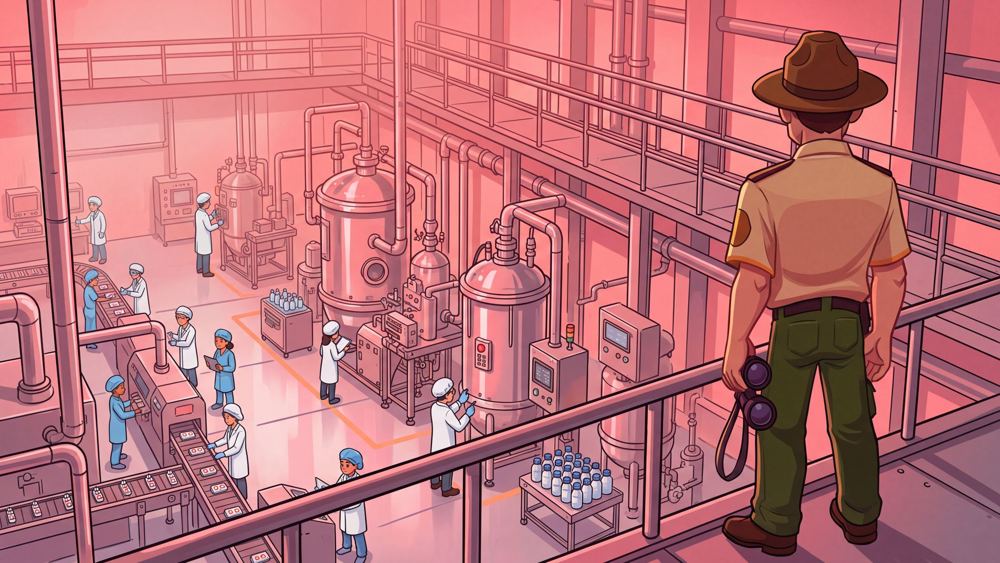
In a pharmaceutical chemistry workshop, this approach made it possible to design an organisation where more than eight day-to-day activities out of ten are handled by the team itself, compared with one in two before, and to free up the equivalent of 2.3 full-time people in a team of around twenty, for the same work. The actual gain then depends on implementation.
An organisation only holds if it is lived
The finest target organisation stays on paper without execution discipline. Clear management rituals, typical days and an individual roadmap for everyone bring it to life. And because a reorganisation affects people, it is prepared with them, from the mapping stage.