FR

Management expertise · GARDER LE CAP method

Manage your quality system so delays no longer run the show

Deviations, CAPAs and change controls piling up, clean-up task forces every year, swamped teams: it’s often your delays that run your quality. We put in place simple, visual, automated management that gives you back control from the third week.

Results measured on our assignments

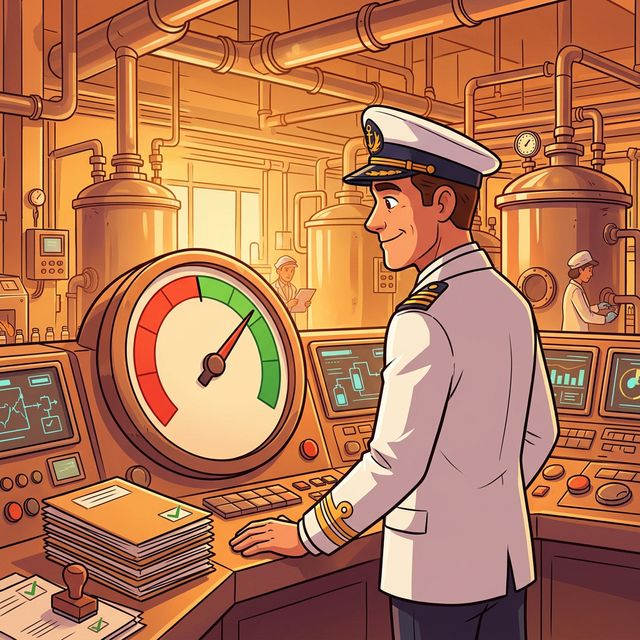
A captain watches a dial move from red to green64 → 18open deviations
A quality manager ticks the last boxes on a calendar of delays31 → 1deviations more than 30 days overdue
Boats loaded with files arrive in port on time50 % → 0CAPAs closed late
A committee approves change controls with a green stamp85 → 27 %change controls closed late

Results measured on several production sites, between the start of the approach and the end of the support, then confirmed one to three years later.

A quality system, however well designed, doesn’t work if it isn’t managed.And sometimes, regular management alone is enough to prevent drift.
Do you know how many deviations, CAPAs or change controls are open on your site right now?

If answering takes you more than five minutes, your management is probably ineffective, or non-existent.

Do you recognise your quality management?

  • Backlogs of deviations, CAPAs and change controls, sometimes for months.
  • A clean-up task force at least once a year, tying up everyone.
  • Repeated postponements and “swamped” teams who never have time.
  • Files wrapped up in a rush, just before the deadline.
  • Management through automatic QMS emails that nobody reads any more.
  • Manual reporting that costs days every month.

Open items, the indicator that says it all

Tracking the open items in your processes and how they evolve, week after week, gives a direct view of their health. Three situations are possible.

→

Open items are stable

You are in balance: the team absorbs the normal flow. Watch out for the first workload peak, which can destabilise everything.

↗

Open items are rising

Danger: the team can no longer keep up with the flow. Lead times get longer and the quality of handling deteriorates.

↘

Open items are falling

You’re regaining control: the situation improves week after week.

Our approach: management tuned to your context

We don’t sell you software: we put in place a management routine your teams sustain on their own.

One module per process
1

One module per process

An approach tuned to each process: BOOSTER for deviations, FOCUS for CAPAs, READY for change controls, FINISH for release. You start with the one that costs you the most.

BOOSTERFOCUSREADYFINISH

Visual management on the shop floor
2

Visual management on the shop floor

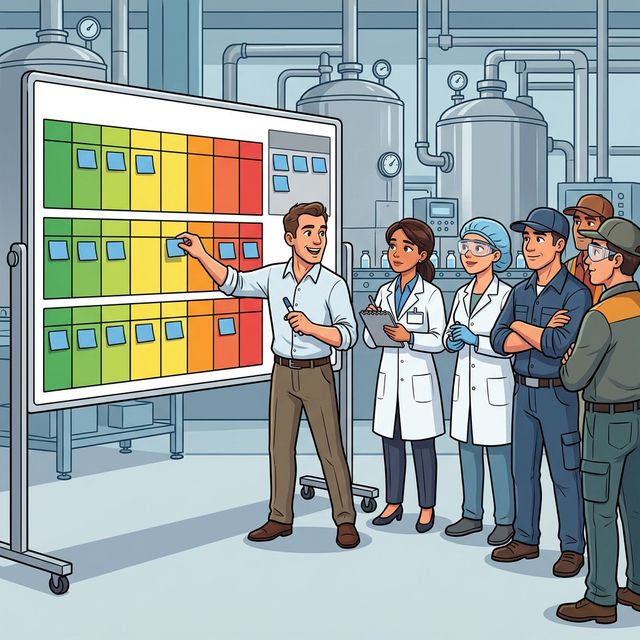
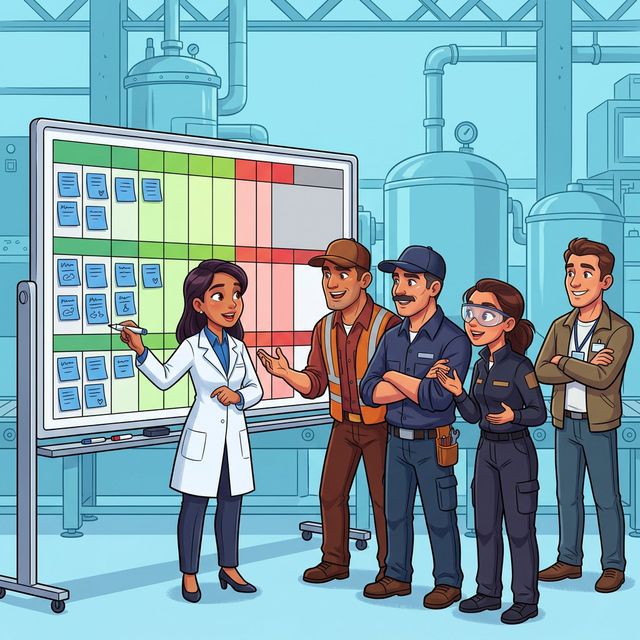
Physical or digital, it shows at a glance the open items, blocked files and the actions decided to unblock them. It is tailored to each process and simple to update.

visual managementblocked files

Short rituals
3

Short rituals

15 minutes a day for deviations, 30 minutes a week for CAPAs and change controls. The substance of the files isn’t dealt with there: we decide what moves them forward.

daily ritualdecisions

Automated data
4

Automated data

One tool per process, fed by an extract from your QMS or connected directly. Your indicators are up to date at all times, and you save at least one day of reporting a month.

real-time KPIsreporting

Workload, finally sized
5

Workload, finally sized

We measure the real handling workload, based on our benchmark: 2.5 h per minor deviation, 6 h per major, 21 h per critical (medians). Your teams’ capacity is sized on facts.

workload / capacitybenchmark

An autonomous internal lead
6

An autonomous internal lead

A member of your team is trained to run the management system, with our support and coaching. Your teams are autonomous from the third week, then we adjust the support to the size of the backlog.

internal leadautonomy

Three situations, three results

CDMO, after a major inspection finding

Backlog divided by 5 in 7 months

412 deviations in backlog and 161 blocked batches. BOOSTER management across 3 areas: visual management and a 15-minute daily ritual, plus a 2-day task force.

  • Open deviations: 316 → 121
  • “To be assessed” for more than 30 days: 48 → 0
  • Average processing time: −41%
243 → 52deviations in backlog, i.e. −79%
Biopharmaceutical site, production sites and support services

No more overdue CAPAs, and rituals still in place 3 years later

Overdue CAPAs every month, actions without an owner and limited visibility. FOCUS management: visual management of CAPAs and a 30-minute weekly ritual, extended to shared support services.

  • Overdue CAPAs: zero, month after month
  • Approach extended to a 2nd entity and to support services
  • BOOSTER and FOCUS rituals still active 3 years later
65 → 0overdue CAPAs per month
Injectables unit, more than 700 deviations a year

Closure time cut by more than half, and a site that manages on its own

No prioritisation, the 30-day GMP deadline not met, delivery delays. Daily quality and production management with dated actions, then weekly management of CAPAs and change controls, until the internal lead was autonomous.

  • Open deviations: 64 → 18
  • Deviations more than 30 days overdue: 31 → 1
  • CAPAs closed late: 50% → 0
48 → 20 daysaverage deviation closure time

See all our case studies

How an engagement works

  1. A consultant maps the quality processes with the team
    AssessmentUnderstand how your deviations, CAPAs, change controls and releases flow: steps, people, volumes and blocking points.
  2. A consultant adjusts the management board to the site’s processes
    AdaptationOur standard management tools adjusted to your flows and your QMS.
  3. Presenting the management board to the production teams
    PreparationSet-up, measurement of the starting point (T0) and bringing the teams on board: communication and explanations.
  4. The consultant runs the first ritual in front of the management board
    LaunchThe rituals start and A-QE runs a large part of the management system.
  5. The internal lead runs the management ritual on her own
    AutonomyYour internal leads run it, and we support them until they are autonomous.

Frequently asked questions about quality management

What does managing a quality system mean?

It means continuously tracking open items in quality processes (deviations, CAPA, change control, release), making blocked files visible and regularly deciding on actions to unblock them. Without management, these processes are driven by delays and release emergencies.

Which indicators should be tracked to manage deviations, CAPAs and change controls?

The key indicator is open items and how they evolve week after week: stable signals balance; rising, danger; falling, regained control. It is complemented by the number of overdue files and the average processing time.

Why aren’t automatic QMS emails enough?

Because they scatter information: everyone receives their reminders, but nobody sees the whole picture or what is blocking. Management puts a shared view back at the centre, with visual management and a ritual where decisions are made.

How long does it take to set up the management system?

The first management rituals are running from the third week. The time needed to clear the backlog then depends on its size, hence support adjusted to each site.

Do we need a new IT tool?

No. Visual management can be physical or digital, and we provide an Excel tool per process, fed by a simple extract from your QMS, or connected directly for real-time indicators.

Is management enough to solve quality problems?

Sometimes, yes: regular management is often enough to prevent drift and clear a backlog. When the causes run deeper, for example weak investigations or recurring human errors, we combine it with our other expertise.

Are your delays running your quality?

Tell us about your situation in thirty minutes. We’ll tell you which process to start with.

Tell us about your situation