FR

Deviation expertise · ELEMENTAIRE method

Improve deviation management on your pharmaceutical site

A swelling backlog, lengthening processing times, criticality that depends on who assesses it, investigations wrapped up the day before the deadline: we help pharmaceutical sites regain control of their deviation process. Since 2019, the ELEMENTAIRE method has been deployed at 11 manufacturers, from SMEs to multi-site groups.

Results measured on our assignments

A mountain of deviation files reduced to a small pile−79 %backlog in 7 months, after a major inspection finding
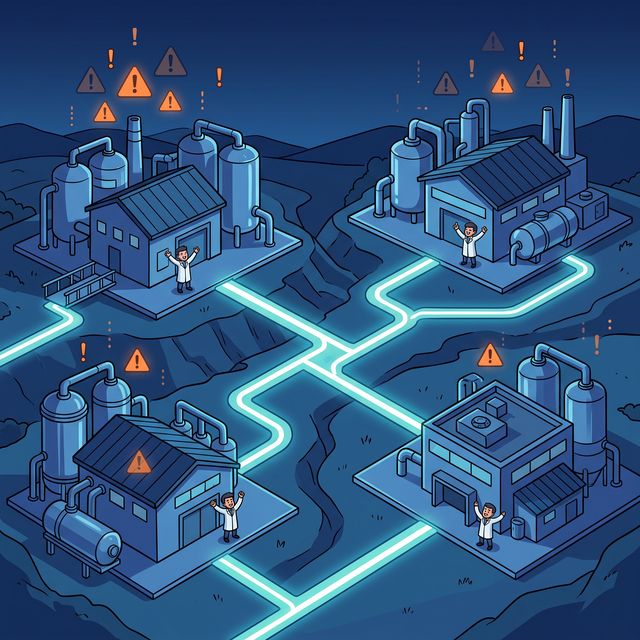
Four linked production sites whose alerts switch off−64 %minor deviations across a group of 4 sites, in 22 weeks
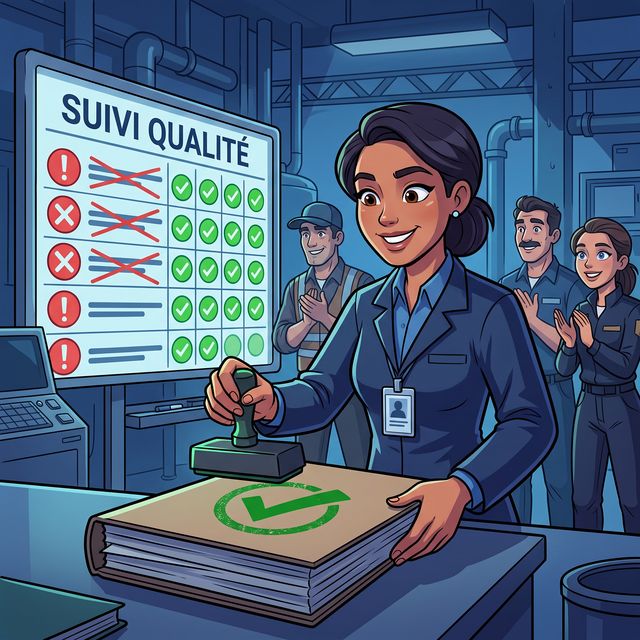
A quality manager stamps a closed file−45 %major deviations over the same period, ANSM CAPA closed
A deviation file speeds along a fast conveyor belt−41 %average processing time, from 36.7 to 21.5 days

Do you recognise your deviation process?

  • Processing times are getting longer and regularly exceed 30 days.
  • Deviations pile up and the backlog blocks batch release.
  • The same event is classified as minor, major or a simple comment depending on who assesses it.
  • A minor deviation is investigated like a major one, and there’s no time left for the real ones.
  • Investigators know the tools (5M, 5 Whys, 5W2H…) but don’t know where to start.
  • A deviation gets attention on the day it blocks a batch, and the root cause is found only half the time.
  • Presenting an investigation during an inspection is stressful, and only the person who led it can defend it.

Our approach: 6 levers, which can be activated separately

Every site is different: for some, the problem is lead time; for others, it’s the value of the investigation. We activate the levers you need.
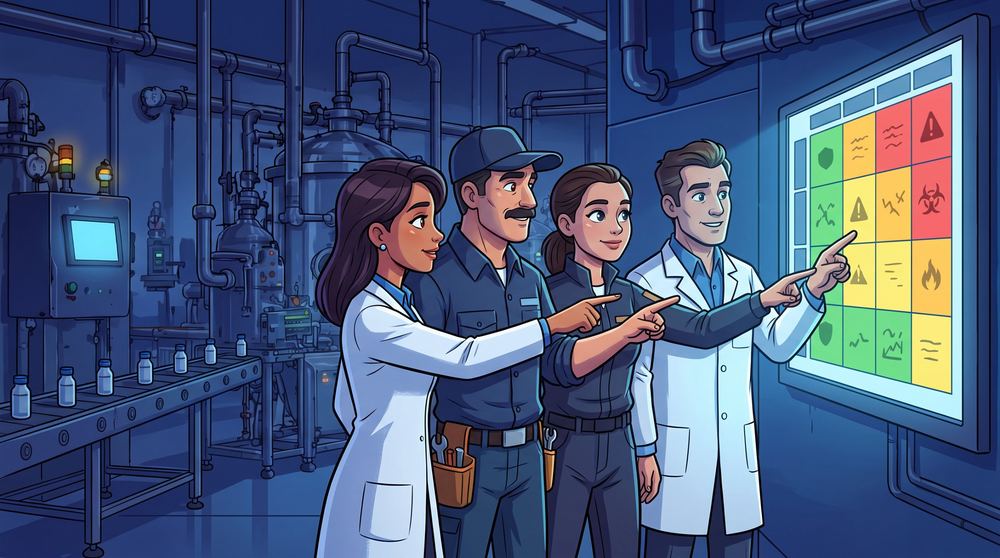
A quality and production committee assesses an event on a risk grid
1

Decide correctly, and fast

A risk assessment based on ICH Q9, adapted to your site, which sets in one go the criticality, the depth of investigation, the search for wider impacts and the need for CAPA. New events are assessed by a collegial committee within 48 hours.

ICH Q9decision committeedeviation / event filter
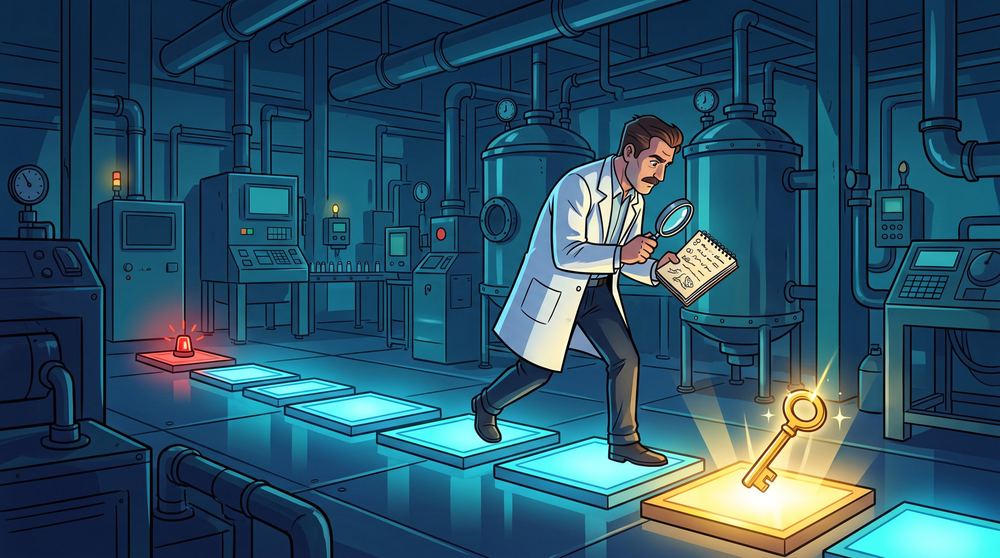
An investigator follows a glowing path step by step to the root cause
2

Investigate step by step

The ELEMENTAIRE method links the tools your teams already know into a step-by-step approach, with a single starting point to avoid the blank page, a structured analysis of hazards, risks and impacts, and a report written during the investigation.

ELEMENTAIREroot causeself-supporting report
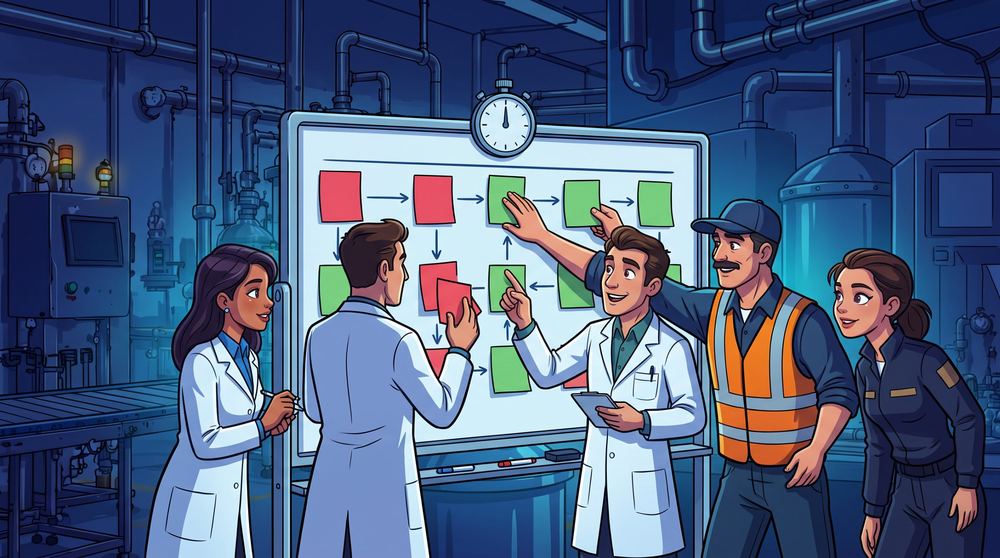
A management ritual in front of a visual management board
3

Manage the portfolio

Visual management everyone can read and a 15-minute daily ritual between quality and production to unblock files before they become urgent. Indicators are updated automatically from your QMS.

BOOSTERbacklogprocessing time
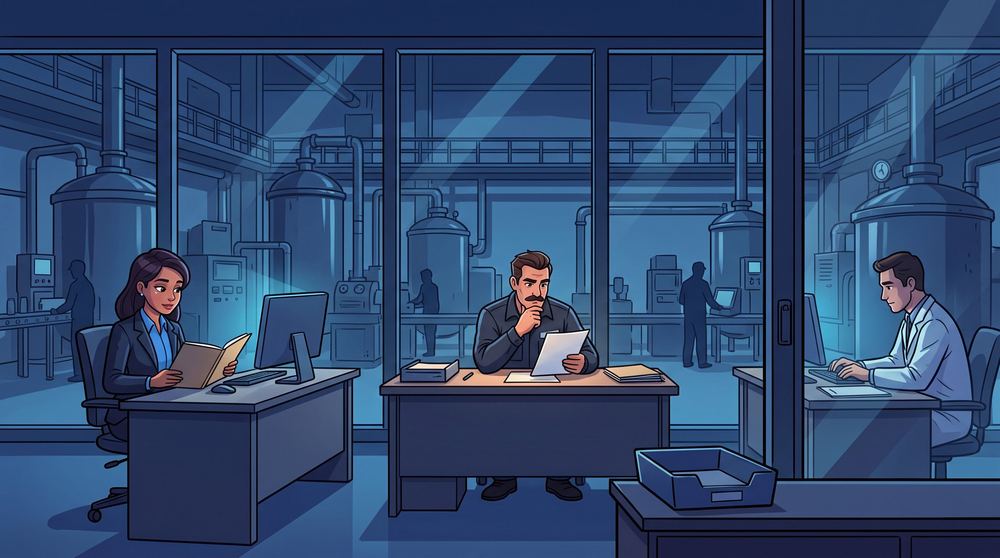
A unit of dedicated investigators in a glass-walled office
4

Organise the teams

Dedicated investigators from around ten deviations opened per week: files are picked up without delay, workload can be managed, and practices stay consistent from one investigator to the next.

dedicated investigatorsroles & responsibilities

Three Brigade consultants arrive as reinforcements in a quality department
5

Reinforce with the Brigade

Consultants trained in ELEMENTAIRE and equipped with our tools reinforce your teams: investigating on your behalf, clearing a backlog as a task force or filling a vacant position, on site or remotely.

reinforcementbacklog task forceEffective Quality Brigade

An investigator assisted by Polton, the investigation AI
6

Accelerate with AI

Polton, our investigation AI developed with Gordios, augments investigators’ work: it decides nothing, but it doubles their productivity. Your data stays in Europe, on mostly local models.

Poltonsovereign AI×2 productivity

Recognised in inspection. On one of the sites where it is deployed, the ELEMENTAIRE method and its self-supporting reports were noted as good practice by FDA inspectors.

Three situations, three results

CDMO, pharmaceutical dosage forms

Remediating a major inspection finding

412 deviations in backlog, including 161 blocked batches. A collegial decision committee, coaching of 6 investigators, daily management across 3 areas and a 2-day task force.

243 → 52deviations in backlog in 7 months, average lead time −41%
Biopharmaceutical group, 4 sites

Redesigning the system ahead of FDA batches

Criticality not aligned with risk, investigations started too late. Group procedure, new “event” category, 132 coaching sessions across 4 sites.

−64%minor deviations, closure of majors from 56 to 44 days
Pharmaceutical company, 2 units

Harmonising decisions after the ANSM

Inconsistent decisions and an ANSM CAPA to close. Definitions and criticality reviewed, procedures rewritten, 64 committees supported until autonomy.

−45%major deviations, ANSM CAPA closed

See all our case studies

How an engagement works

  1. A consultant interviews an operator at the foot of a production line
    Assessment2 to 3 days on site, interviews and analysis of your deviations.
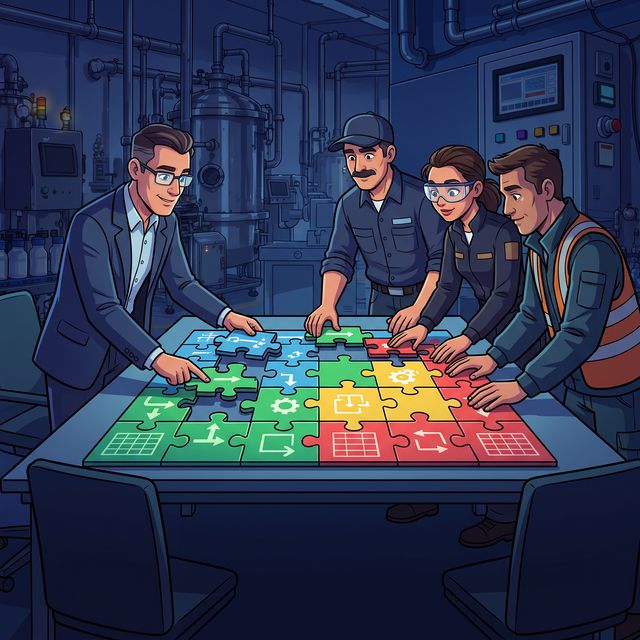
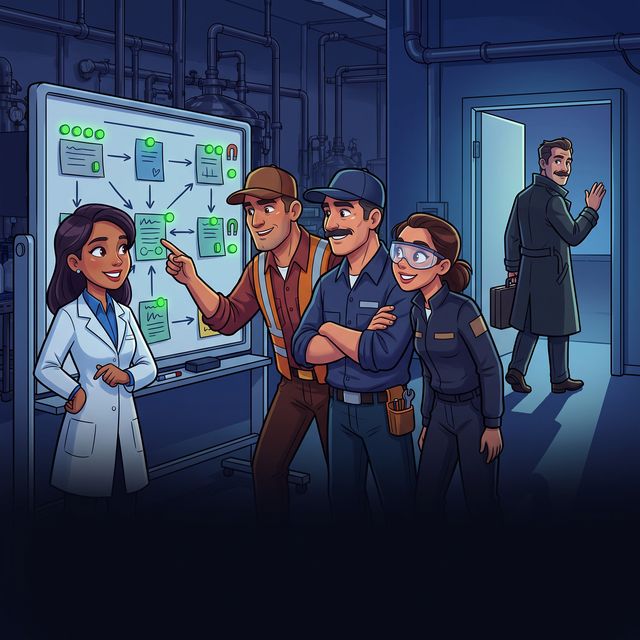
  2. A team assembles the puzzle of the process and the risk grid
    AdaptationICH Q9 risk grid, process, roles and operational set-up adjusted to your site and your QMS.
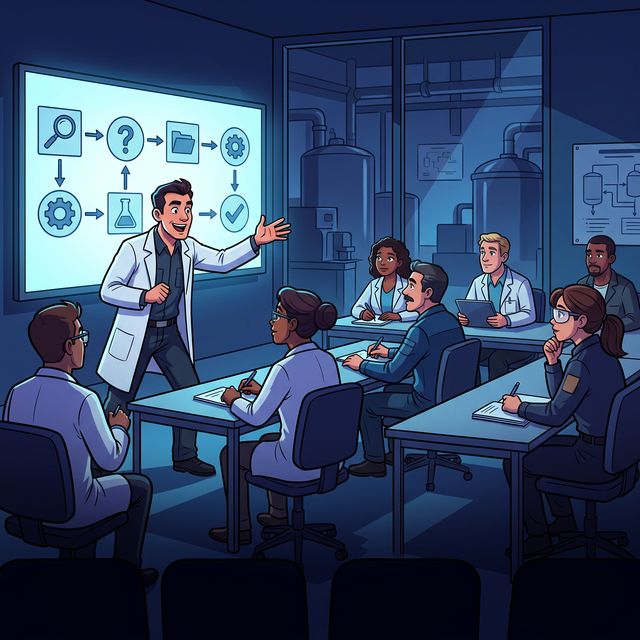
  3. A trainer presents the investigation method to investigators
    TrainingA 2-day introduction and online training for investigators.
  4. A coach supports an investigator on a deviation file
    CoachingInvestigations and committees supported side by side, on your real files.
  5. The team runs its committee on its own as the consultant leaves
    AutonomyIndicators tracked, recurrence committee: your teams manage on their own.

First effects within a month with the management system, consolidated results in 4 to 7 months on one site.

Frequently asked questions about deviation management

What is a deviation in the pharmaceutical industry?

A deviation is a departure from an approved procedure, specification or instruction (GMP), occurring during the manufacture, testing or storage of a medicinal product. It must be recorded, assessed according to its risk, investigated to find its root cause and, if necessary, lead to a CAPA.

How do you reduce a deviation backlog?

By combining three levers: daily management of the portfolio (visual management and a 15-minute ritual), a rapid committee assessment of each new event, and an investigation depth proportionate to risk so that a minor deviation is no longer handled like a major one. On our assignments, for example, the backlog was divided by 5 in 7 months.

How do you apply ICH Q9 to deviation management?

The ICH Q9 guideline on quality risk management requires effort to be proportionate to risk. We translate it into concrete severity, probability and detectability criteria, adapted to your site, which allow 4 decisions to be made at once: criticality, depth of investigation, the search for wider impacts and the need for CAPA.

How long does it take to improve the deviation process?

The first effects of the management system are visible within a month. A revised process, trained investigators and autonomous committees generally take 4 to 7 months on one site, longer for a multi-site roll-out.

Does your method work with our QMS tool?

Yes. We have adapted the approach to TrackWise, ENNOV, SAP or simple Excel files. The tool’s workflow is adjusted to the method, not the other way round.

Do you step in after an ANSM or FDA observation?

Yes, it’s a common case. We build the response and the remediation plan with you, then put in place the process that will demonstrate its effectiveness at the next inspection.

Is your deviation process costing you too much energy?

Tell us about your situation in thirty minutes. We’ll tell you what we would do, and where to start.

Tell us about your situation