Documentation and training expertise · SMART approach
Documentation and training that are genuinely useful at the workstation
Fifty-page procedures that nobody reads, training done because it has to be done, and practices that drift from one trainer to the next. Our principles for putting the user back at the centre, and our partner Sinfony to deploy them.
In partnership with 
Do you recognise your documentation system?
- Before starting their job, an operator has to read hundreds of documents.
- Text-heavy procedures, written for inspectors, that leave room for interpretation.
- The information isn’t at the workstation: people work from memory.
- Training a newcomer or a temp is long and difficult.
- From trainer to trainer, the practice drifts: after two links in the chain, only a quarter of the original training remains.
- Changing a document takes months, so practices drift away from it.
Our 4 principles for useful documentation and training
 1
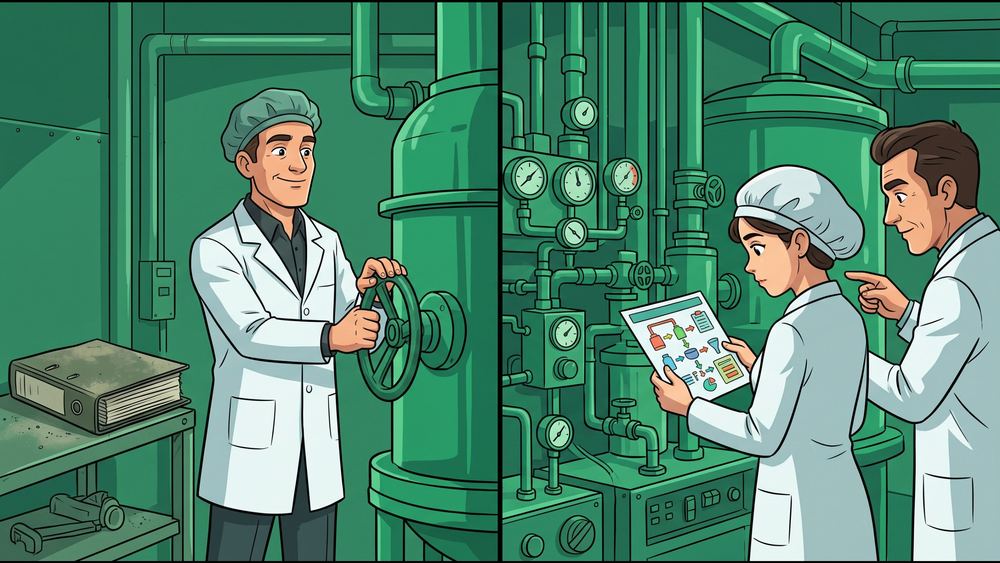
Define the real need with 3 criteria
An experienced operator who does a simple task every day won’t read their procedure: it’s a fact that has to be accepted. A critical task performed every six months calls for a completely different approach.
 2
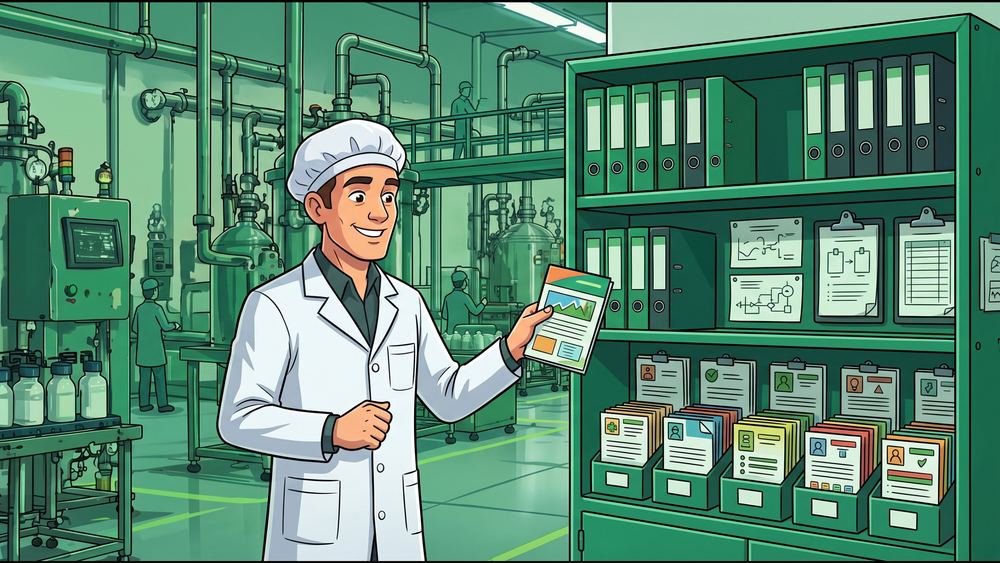
Structure information to make it accessible
All information answers a question: what, who, where, when, how, how much, why. Sorting it into distinct document levels creates search reflexes.
 3
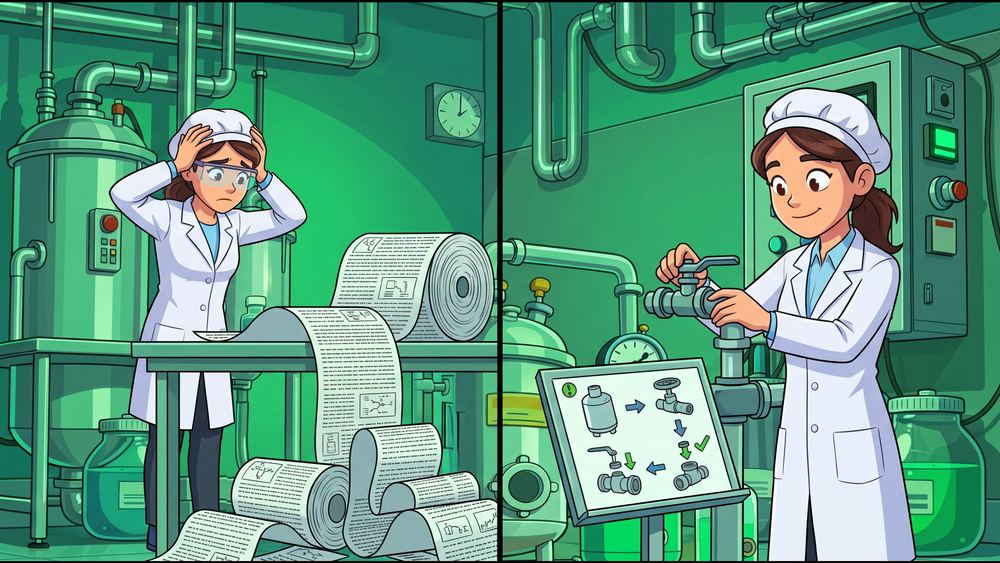
Fewer words, more diagrams, even animation
Text-heavy procedures aren’t understood. Lego and Ikea realised this long ago: each type of document has its own layout, suited to its use.
 4
Task observations to check training over time
For activities that justify it, regular observations are used first to qualify people, then to maintain their qualification on the most critical tasks.
| Level | What it contains | Its format |
|---|---|---|
| 1 · Umbrella procedure | The why, the guiding principles and the framework of a process | Text in short sentences, with overview diagrams |
| 2 · Instruction | Who does what and when, and how much for recipes | A process diagram or a table |
| 3 · Work instruction | The how, step by step | An assembly-instructions format, highly visual |
To transform your system, we work with Sinfony
Sinfony specialises in documentation and training in the pharmaceutical industry. It deploys these principles across your site:
- simplified procedures that teams actually read,
- short, digital training tailored to each profile,
- a single documentation and training system, easier to maintain.
Further reading
Frequently asked questions about documentation and training
Why aren’t procedures read at the workstation?
Because they are written for inspectors rather than for users: long, text-heavy, filed far from the workstation. When information is neither easy to find nor easy to understand, the operator works from memory.
How do you define the real documentation and training need?
With three criteria: how often the task is performed, its complexity or criticality, and the person’s experience. A critical task performed every six months isn’t documented or trained like a simple task performed every day.
Should we switch to video procedures?
Rarely: they are cumbersome to produce, update and consult. Interactive documents, with animated diagrams built into a simple app, are far more promising.
How do you check that training holds up over time?
With regular task observations, for activities that justify it. They are used first to qualify people, then to maintain their qualification on the most critical tasks.
Who carries out the documentation and training overhaul?
Our partner Sinfony, which specialises in documentation and training in the pharmaceutical industry. We contribute on related topics: human error, batch records and quality culture.
Do your documents and training cost you more than they help?
Let’s talk: we’ll point you towards the right approach, with Sinfony or with our expertise.